 “Best in World”
Legal Consequences of Fire-Caused Death or Injury
Who is held criminally liable, what insurers refuse to pay — and the one protection that prevents it.
The cabling that spreads the fire also powers your pumps, alarms and exits — it fails when you need it most.
Under the OSH Code 2020 · BNS 2023 · Consumer Protection Act 2019, a fire death is now a personal criminal offence.
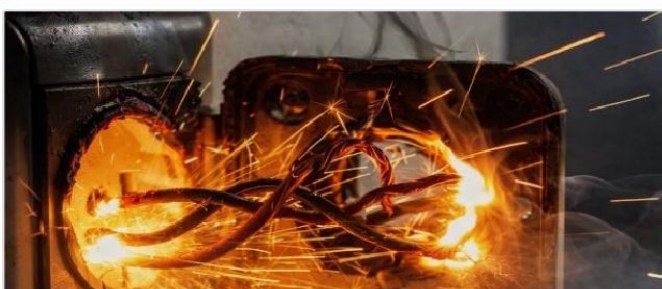
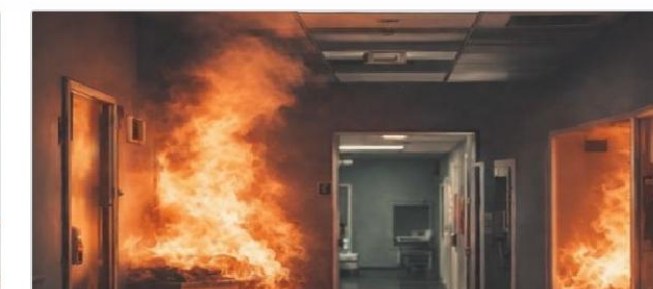
Every building trusts two systems to protect life. Neither stops the fire — because it starts where neither can reach: inside the panel, inside the cable.
What you’re told Detects the fire and puts it out before it spreads.
What really happens — the fire is always one step ahead
| First 60 seconds | 1–3 minutes | After 3 minutes | |
|---|---|---|---|
| The fire | An arc ignites inside the panel. | Flame races along the cable trays. | Critical circuits are already dead. |
| The system | Silent — nothing has triggered. | Still silent — no heat or smoke has reached it. | Alarm sounds, water finally flows. |
What you’re told The cable resists fire and will not feed the flame.
What really happens — it only buys minutes, then becomes fuel
FRLS delays surface flame 20–40 minutes and lowers smoke — but the cable is still combustible. It protects nothing that matters:
Built into the building itself — what should have been there from day one.
Panels are the source. Trays are the highways. Openings are the gates. Passive protection shuts all three — armours the cables and joints, seals every gap, shields the escape routes — holding the fire back before anyone arrives, keeping critical circuits alive.
When suppression is too late, FRLS has already failed, and passive protection was never installed — the fire reaches people. From that moment the consequences stop being the building’s. They become yours.
LEGAL — Director-occupier & manager jailed personally, not just the company. (BNS 106/105/287/125)
INSURANCE — Negligence covered; fraud or non-disclosure voids it; under-insurance cuts the payout.
STATE — Factory inspectorate + fire service; NOC & NBC-2025 audits; absolute liability for hazardous harm.
LEGAL — Owner, proprietor & licensee jailed personally — alongside the officials who cleared the NOC; victims also sue as consumers. (BNS 106/105/287/125; CPA 2019)
INSURANCE — Public-liability protects victims; hospitals add indemnity; criminal liability stays uninsurable.
STATE — Whole occupancy classes swept — arrests, licence cancelled, sealing; courts monitor compliance.
Statistics: NCRB 2022; Delhi/Mumbai fire-service data. Legal & insurance positions summarised — verify with counsel and insurer.