
Gas Suppression + Auto-Tripping Are Not Enough.
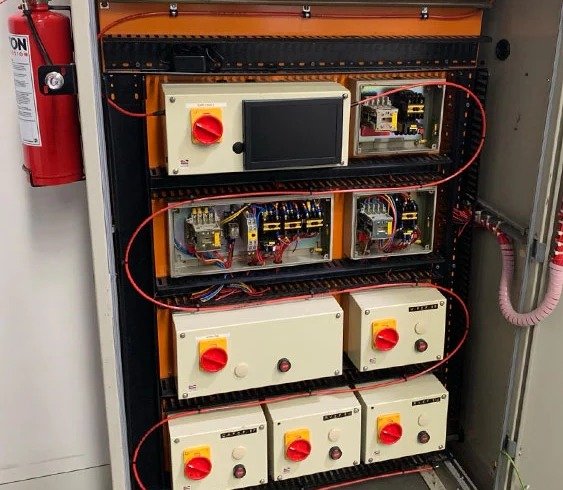
GAS — only if: enclosure sealed so agent holds density · sensor at the exact fault point · generator within service life · hot copper does not re-ignite · fire actually inside that one box. Even a perfect discharge is one shot — the next fault meets an empty canister.
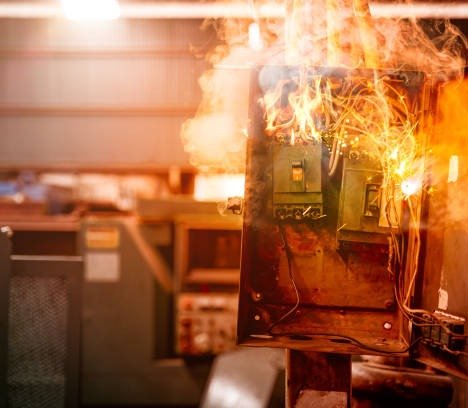
TRIP — only if: the fault sits on a sensed point — hot-spots between go unseen · the fault is slower than the relay (arcs win in milliseconds) · nobody bypassed it after nuisance trips · its own control wiring has not burnt first. A successful trip only cuts power — it does not extinguish plastic already burning.
Ten conditions. One shot.
That is probability, not protection.
The gas was spent or leaked. The trip never saw the fault. The spark lands on the panel’s internal wiring — its own fuel. Everything now turns on one question: can that wiring burn?
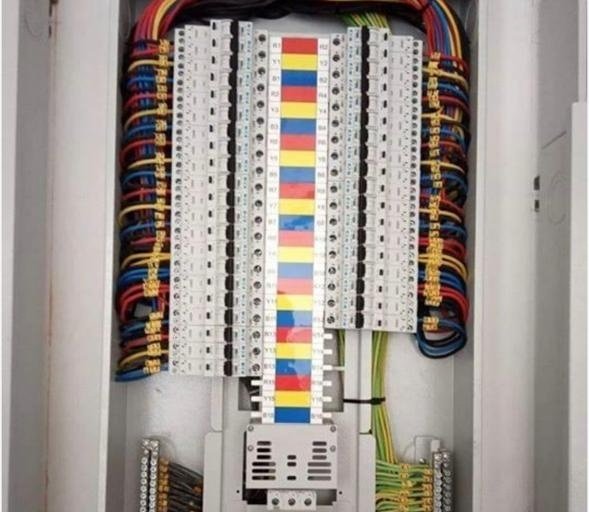
EC 7034 — it cannot. The spark dies on a wire that will not flame. Panel internal wiring · translucent, colour codes readable · CBRI 120-min. Working at precisely the moment gas and trip are not.
FBS 73 — every gap sealed: the fault sits starved of oxygen. The same seal that held your aerosol at design density — your gas works because of it.
DC 52 — the panel’s own paint refuses to become fuel.
Three defences on duty at the exact moment of failure — nothing to activate, nothing ever switched off.
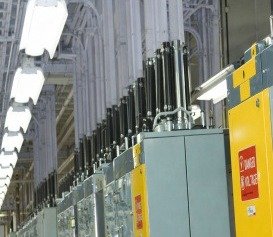
Suppression’s jurisdiction ends at the panel door. Beyond it — trays, trenches, risers, galleries — nothing stands guard.
EC 43 / Survival — the highway: spread stopped 240-min; fire pump, alarms & trip circuits alive 240-min at 750 °C (IEC 60331-21)
FM-71 + FB-250 — the openings: 2-hr firestop, wall & floor (IS 12458 · UL 1479)
Coated fuel is fuel no more.